
ter, clearer choices. Imagine a single dashboard that shows pipeline health, target valuation, due diligence status and integration tasks at a glance; which M&A software tools bring all that together? This article points to top M&A software tools that cover deal sourcing, pipeline management, virtual data rooms, transaction reporting, financial modeling and analytics so you can pick the right stack for the deal lifecycle.
To help with that, Finsider’s QoE Reports offers clear, practical comparisons of platforms and features, helping you shortlist tools, estimate effort and reduce execution risk.
10 Top M&A Software Tools to Explore
1. Finsider: Fast Quality of Earnings With Ai Precision
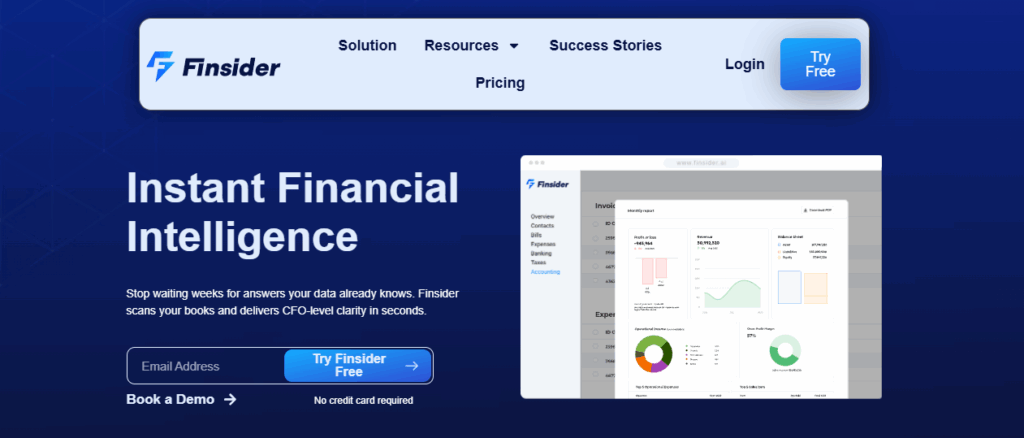
Finsider connects directly to accounting systems and runs an automated 74-point scan to spot irregularities in ledgers, revenue recognition, and expense flows. The platform focuses on Quality of Earnings workflows, running anomaly detection and variance analysis that turns raw GL data into actionable exceptions within minutes.
Use case examples include private equity buy-side reviews and advisor-led sell-side packets that need consistent, auditable QoE reports. Finsider also supports export to financial models and integrates with deal trackers and VDRs for handoff to legal and tax teams.
Key Capabilities
- Accounting system integration and GL level analysis
- 74 point automated check of revenue, expenses, receivables, and accruals
- Anomaly detection and accuracy scoring for material issues
- Exportable QoE reports and model ready schedules
- Deal based guarantee on issue detection
2. Datasite Diligence: Secure VDR with AI Document Workflows
Datasite provides a virtual data room built for complex transactions. It auto indexes documents, applies context aware categorization, and runs redaction at scale to protect PII and contractual clauses.
The system tracks buyer engagement across folders and documents, surfacing hotspots that often point to legal, tax, or commercial risks. Teams use Datasite to control access, maintain audit trails for regulators, and compress review cycles where multiple stakeholders need simultaneous access under strict permissions.
Key Capabilities
- AI based document indexing and auto categorization
- Automated redaction and watermarking
- Real time analytics on reviewer behavior and document engagement
- Robust permissions, version control, and full audit trails
3. Alphasense: Search And Insight Extraction Across Public Filings and Research
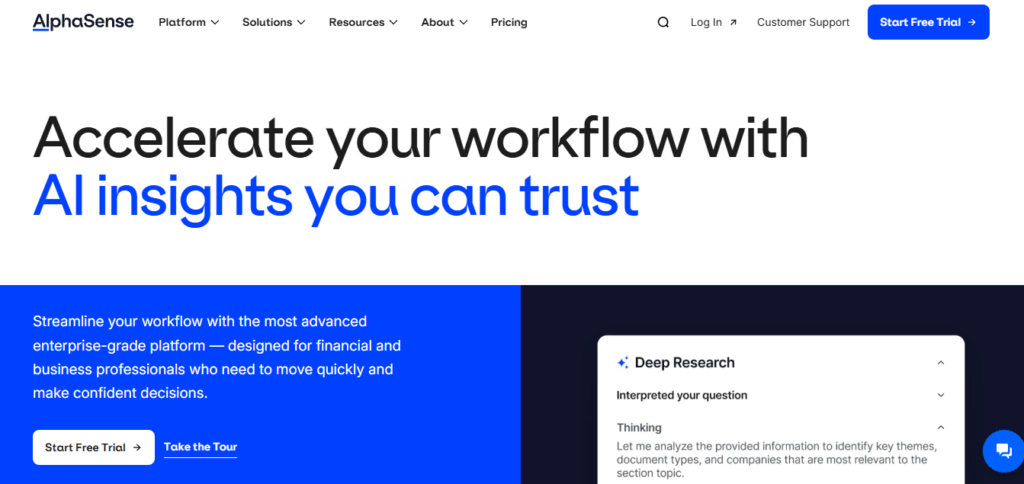
AlphaSense applies natural language processing to earnings calls, SEC filings, broker research, and news to surface trends and risk signals that standard keyword search misses. Analysts can run conversational queries, get AI generated summaries of calls and filings, and set smart alerts for emerging themes around competitors or regulation.
Use it for market due diligence, competitor tracking, and building evidence for valuation assumptions during deal screening.
Key Capabilities
- NLP powered search across filings, calls, research, and news
- Sentiment analysis and theme tracking for sector moves
- AI summaries and highlight reels for quick briefings
- Alerting and integration with internal research notes
4. Grata: Find Private Targets By Business Model And Signals
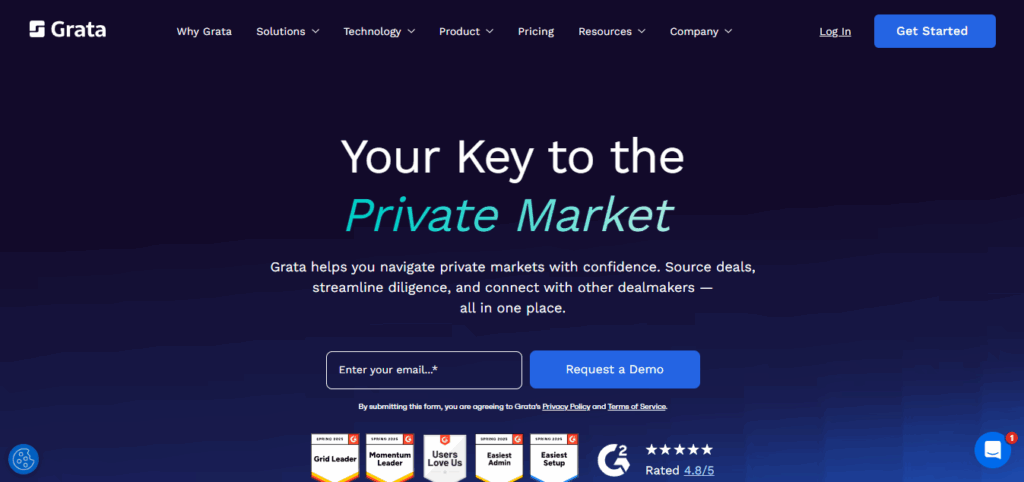
Grata maps the private company universe using web data and public records so you can search by what a company does rather than by SIC codes. Enter plain language queries like B2B SaaS for logistics or specialist parts maker for electric vehicles and get targeted lists of private targets.
Grata also flags M&A signals such as:
- Funding rounds
- Leadership changes,
- Site activity that hint at sell side readiness
Use it for proprietary sourcing and uncovering hidden targets that do not appear on broker lists.
Key Capabilities
- Company profiles aggregated from web and public data
- Business model and keyword driven search
- M&A signal alerts and CRM integrations
- Exportable target lists and outreach data
5. Tableau Plus Salesforce Einstein Analytics: Dashboards and Predictive Integration Tracking
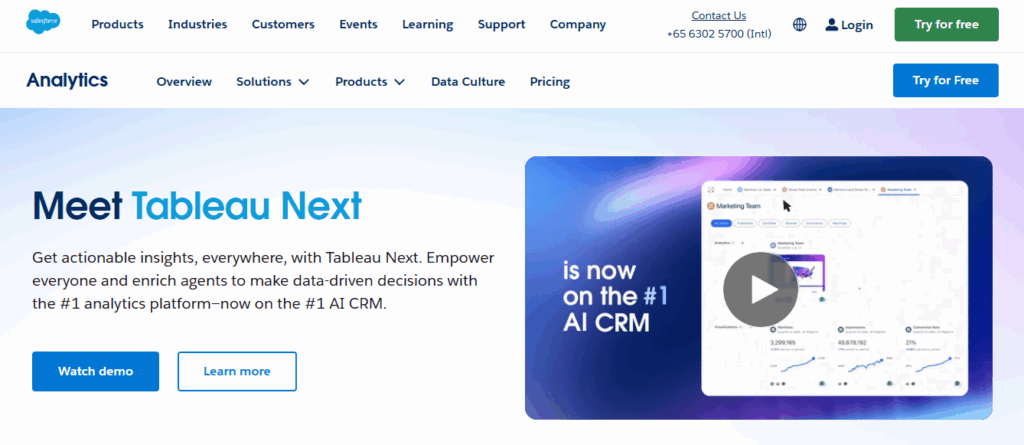
Combine Tableau visualization with Einstein predictive analytics to monitor integration KPIs and synergy realization after close. Pull data from HR, finance, and operations systems, build interactive dashboards that track revenue retention, cost synergies, headcount risk, and supplier consolidation.
Einstein adds predictive layers that flag upcoming performance drops or forecast integration slippage. This setup supports integration management offices that need both clear reporting and forward looking signals to intervene early.
Key Capabilities
- Custom KPI dashboards for synergy and integration tracking
- Connectors to CRM, ERP, HR systems and finance tools
- Predictive analytics and anomaly detection
- Drill down reporting for operational owners
6. Dealcloud By Intapp: CRM, Pipeline, and Relationship Intelligence for Deal Teams
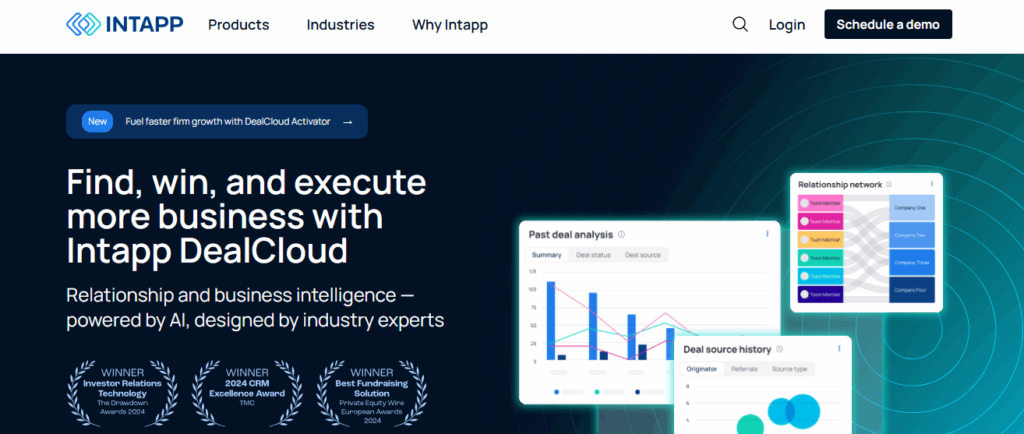
DealCloud centralizes relationships, pipelines, and deal activity while adding an intelligence layer that surfaces warm connections and historical deal context. The platform logs emails, meetings, and documents and scores engagement to help originators prioritize outreach. It also supports compliance workflows and audit trails for regulated firms.
DealCloud suits firms that treat relationships as a primary asset and need a transaction centric CRM that ties directly into execution tasks.
Key Capabilities
- Deal pipeline visualization with relationship mapping
- Activity tracking and engagement scoring
- Email and calendar integration plus third party data feeds
- Compliance ready audit trails and reporting
7. Dealroom: Project-Driven Due Diligence With a Collaboration Focus
DealRoom merges a virtual data room with project management, allowing teams to manage diligence requests, assign tasks, and close items all in one place. The platform centralizes files, Q and A threads, and task lists, reducing back-and-forth communication and accelerating request closure times.
It also exposes analytics on outstanding items and reviewer throughput to help deal leads allocate resources. DealRoom works well when teams need to coordinate multiple advisors and keep a tight timeline.
Key Capabilities
- Centralized repository with integrated project management
- Q and A tracking and task owner accountability
- Role based permissioning and granular document controls
- Analytics on request flow and closure rates
8. Midaxo: M&A Platform for Process-Driven Due Diligence and Playbooks
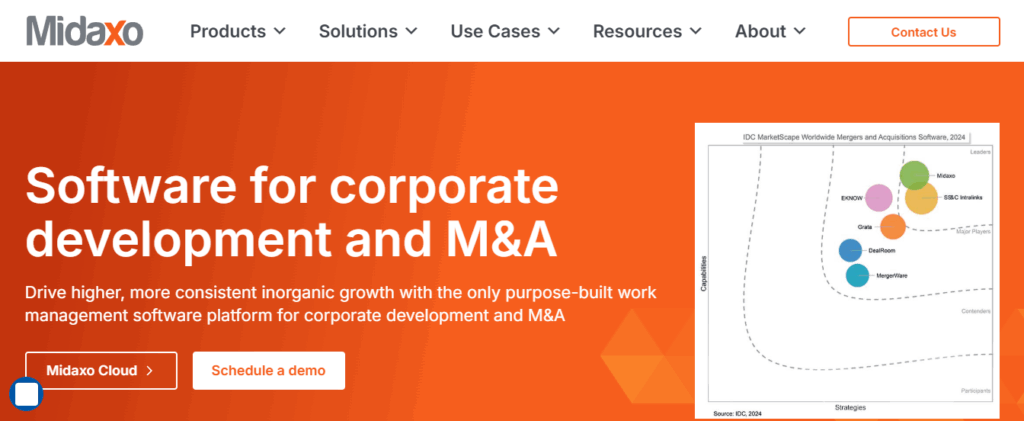
Midaxo provides cloud-based M&A workflows with configurable playbooks for due diligence, integration, and vendor evaluation. It gives a single source of truth for documents, tasks, and roles while offering one-click reports and pre-configured dashboards to maintain consistency across deals.
Use Midaxo to reduce tool sprawl and keep workflows repeatable across teams.
The platform supports risk scoring and deadline tracking tied to specific diligence steps.
Key Capabilities
- Configurable playbooks and templates for diligence and integration
- Centralized document and task management with role assignments
- Real time reporting and pre configured dashboards
- Risk scoring and deadline monitoring
9. Ansarada: AI-Driven Dealroom With Proactive Risk Detection
Ansarada focuses on automation, document protection, and early risk identification within the data room. Its AI flags high-risk clauses, monitors anomalous access patterns, and supports due diligence questionnaires to accelerate disclosure planning.
The platform also offers reputation protection tools and templates to speed document preparation. Teams use Ansarada when they need tight control over sensitive information and want AI to surface contractual risks before external parties review them.
Key Capabilities
- Document risk scoring and sensitive clause detection
- Secure virtual rooms with monitoring and permission controls
- Due diligence questionnaire automation and templates
- Reputation and compliance monitoring tools
10. Diligent Boards: Board Level Collaboration and Third Party Risk Oversight
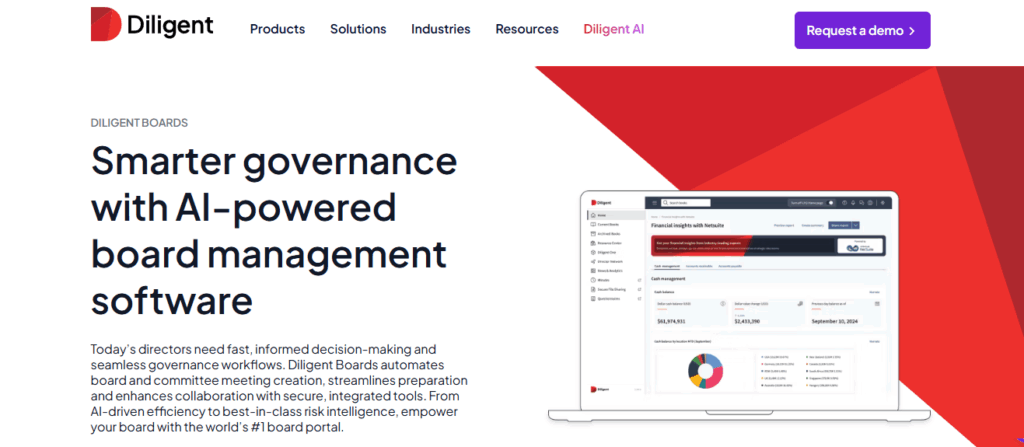
Diligent Boards provides secure board collaboration tools plus vendor and third-party risk management. The platform aggregates research on beneficial ownership, sanctions, and media issues and links that intelligence to vendor profiles for ongoing monitoring.
It supports agenda management, annotations, and secure distribution of board materials while keeping a centralized record of decisions and vendor assessments. Governance teams use Diligent to tighten oversight of strategic vendors and ensure board materials reflect current risk signals.
Key Capabilities
- Board meeting management and secure collaboration
- Third-party risk assessments with global research and screening
- Centralized vendor library for onboarding and performance monitoring
- Configurable reporting for governance and compliance
Which of these match your process and tool stack needs? Tell me whether you prioritize sourcing, execution, or post-merger tracking, and I will point you to the best fits and integration patterns.
Related Reading
Key Features to Prioritize in M&A Software

Data rooms and deal platforms must protect the confidentiality of financial statements, contracts, and buyer and seller data. Look for virtual data room features such as:
- IP address and device restriction settings
- End-to-end encryption with AES 256
- Multi-factor authentication with SSO support
- Role-based access control
- Dynamic watermarking
- Remote document shredding
- View-only access
Require regulatory compliance evidence for GDPR and HIPAA, and vendor security attestations like SOC 2 or ISO 27001. Ensure full audit trails that track document views, downloads, edits, and permission changes, and verify encryption in transit and at rest. Verify SOC 2 or ISO 27001 reports and test device restriction settings during a trial.
Make Teams Move Fast: Collaboration Built for Deals
Deal teams work across offices, time zones, and advisors, so collaboration should be secure and friction-free. Prioritize integration with:
- Slack
- Microsoft Teams
- Real-time commenting and annotation inside documents
- Built-in Q&A with question routing and approval
- Version history and document comparison tools
- Task assignment with internal messaging.
External user invites must support restricted access and expiration controls so advisors and bidders see only what they need. Look for notifications, activity tracking, and an audit trail tied to the deal management system so follow-up is fast and accountable. Ask for demos of Q and workflows and real-time commenting during a test case.
Plug and Play: Integration That Keeps Data Flowing
Avoid tools that create silos; aim for platforms that connect to your ecosystem. Expect APIs and pre-built connectors for CRM systems like Salesforce and HubSpot, ERP and accounting systems such as NetSuite and QuickBooks, electronic signature providers like DocuSign and Adobe Sign, and cloud storage sync with:
- Google Drive
- OneDrive
- Dropbox
Support for SFTP, webhooks, and automated data sync between deal management and the VDR reduces manual imports and keeps a single source of truth. Check field mapping, batch import performance, and sandbox API keys so you can automate reconciliation and reporting without risk. Map your data flows and test the APIs in a sandbox.
Actionable Numbers: Analytics and Reporting for Decisions
Good analytics turn activity into actionable insights during due diligence and negotiation. Seek exportable reports in:
- Excel
- CSV
Real-time dashboards that show deal progress and activity trends, customizable KPIs for due diligence completion and reviewer engagement, and document engagement heatmaps that reveal which pages attract attention.
Predictive analytics and scoring models can flag high-risk targets or likely deal breakers, while OCR and text indexing speed search across contracts and financials. Ensure scheduled reports, ad hoc exports, and raw data access so your accounting and legal teams can slice the data for their needs. Set KPIs you will measure before switching providers and export sample reports to validate output.
Hands Off Workflows: Automation That Cuts Rework
Reduce manual chores with workflow automation that enforces process and prevents missed steps. Expect automated reminders for deadlines, rule-based task routing that assigns reviewers by document type, innovative templates for NDAs and LOIs, auto tagging of uploaded files using content recognition, and auto population of due diligence checklists from uploaded documents.
Support conditional approvals, approval chains, and e-signature triggers so deals move through stages without bottlenecks. Keep a clear audit trail of automated actions and manual overrides to preserve governance. Build a simple automation recipe and run it on a pilot deal to confirm behavior.
Grow Without Friction: Scalability for Multiple Deals
Your tool must handle a single sensitive sell-side process and scale to many simultaneous buy-side or portfolio transactions. Look for a dashboard for:
- Multiple deals with per-deal workspaces
- Fine-grained permission controls
- Support for concurrent deals across teams and geographies
- Elastic storage that grows with document volume
- Performance monitoring to preserve uptime under load.
Confirm user license models, guest access limits, and bulk administration features that make onboarding and offboarding fast. Validate data residency and retention settings for cross-border deals and test performance with large document sets. Review SLA terms for uptime and test performance with large document sets.
Finsider AI: Faster, Smarter Financial Scans
Ready to deliver QoE reports 60% faster while identifying issues that manual reviews miss? Finsider’s AI-powered financial analysis platform connects to your client’s accounting systems. It performs a comprehensive 74-point scan in minutes, catching 95% of material issues compared to just 65% with traditional methods, freeing your team to serve more clients with lower costs and reduced risk.
Book a demo today and experience our deal-based guarantee: if our AI does not identify at least one material issue your manual review missed, your first deal is completely free.
Related Reading
Benefits of Using Specialized M&A Software

Specialized M&A software centralizes financial reports, contracts, forecasts, and diligence materials into a single secure repository. Integrations pull data from:
- Accounting systems
- CRMs
- Public filings
While OCR and metadata tagging make documents searchable, automated ingestion and indexing cut manual entry and reduce reconciliation errors that slow deals.
Users run ad hoc queries, link source files to financial models, and maintain a clear audit trail for every document access and edit. You can pull an economic model, a legal contract, or a historic performance report from one place within seconds.
Faster Deal Sourcing: How Tools Improve Target Screening and Fit
Deal management platforms let you define custom search criteria and screen thousands of targets rapidly. AI-driven screening, deal origination CRM features, and industry data feeds filter prospects by size, sector, geography, revenue growth, margin profile, and strategic fit.
Scoring engines rank targets and surface the highest potential matches so teams prioritize outreach and allocate diligence resources where they matter most. Want to find acquirable companies that match your technology stack or customer overlap? These tools produce a ranked deal pipeline in minutes instead of weeks.
Smarter Valuation: Faster Models with Better Accuracy
Valuation modules combine comparable company analysis, discounted cash flow models, sensitivity sweeps, and scenario analysis into repeatable templates. Automated feeds supply market multiples, cap table snapshots, and historic performance inputs so analysts spend less time cleaning numbers and more time testing assumptions.
Risk assessment features let you model tax, currency, and integration costs and run Monte Carlo-style simulations where needed. Clear charts and exportable outputs help you present comparable valuations to boards and investors without reformatting spreadsheets.
Real Time Teamwork: Collaboration and Version Control
Transaction management platforms create a single source of truth for internal teams and external advisors. Role-based access, inline commenting, task checklists, and version history keep negotiators, legal counsel, finance teams, and consultants aligned across time zones.
Virtual data rooms and secure document sharing mean you can invite external parties with tailored permissions, track NDA acknowledgments, and maintain editable redlined agreements without emailing conflicting versions. Activity feeds and notification rules push critical updates to the right people at the right moment.
Locking Down Secrets: Security, Compliance, and Auditability
Security controls in M&A software go beyond password protection. End-to-end encryption, multifactor authentication, granular access rights, watermarking, and dynamic document permissions limit exposure during diligence.
Compliance features support:
- GDPR
- HIPAA
- SOC 2
- Other regulatory requirements
While detailed audit logs and user activity reports meet internal governance needs. Admins can revoke access, require additional verification, and review who viewed or exported any file at any time.
How to Choose the Right M&A Software

- Ask how the platform handles deals like yours. Large cross-border transactions need a virtual data room that supports massive document sets, strict audit trails, granular permissions, and data residency controls.
- More minor or internal carve-outs may favor a lighter deal management tool with fast setup and simple document management.
- Does the vendor support multi-party collaboration, multiple advisor roles, and complex permission tiers? Test for role-based access, version control, redaction, watermarking, and a searchable index with OCR so documents remain findable as the data set grows.
Think About Who Will Use The System
- Will legal, tax, compliance, investment banking, and integration teams all need concurrent access? Look for a platform that offers a question and answer module, threaded comments, and clear activity logs so each stakeholder sees only the files and actions assigned to them.
Ask for examples of similar-sized deals they have supported and request reference clients in your sector.
Usability and Support: Make Adoption Fast and Reliable
Who will actually use the software day to day? Choose a product with an intuitive interface, fast onboarding, and clear workflows for due diligence, bidding rounds, and closing.
Try dragging and dropping folders, performing batch uploads, running full text searches, and applying bulk permissions during your trial. Watch how the system handles metadata tagging, indexing speed, and search latency under load.
Customer support matters when deadlines compress. Look for vendors that provide:
- Dedicated onboarding
- Live chat
- 24/7 support options
- Named customer success manager for critical deals
Ask about service level agreements, escalation paths, and average response times during peak deal activity. Does the vendor offer training, administrator controls, and in-platform help that reduces reliance on external support?
Cost Versus Capabilities: Pay for What You Will Use
Vendors charge:
- By user
- By gigabyte
- By project
- With modular subscriptions
Which model aligns with your transaction volume and budget? For long-running integration projects, you may prefer an enterprise subscription. For single deals, a per-deal fee with limited users might be cheaper.
Request a cost breakdown for storage over time, API usage, and optional modules such as AI-assisted document review, advanced analytics, or CRM integration. The list must have features before you evaluate tiers.
Include:
- Secure file sharing
- Encryption at rest and in transit
- Audit trail depth
- SOC2 or ISO27001 compliance
- Single sign-on
- Two-factor authentication
- API integrations with accounting and CRM systems
Avoid paying for analytics modules or advanced workflow automation if your team will never use them. Negotiate trial pricing, pilot periods, and pricing caps for unexpected transfers.
Test Drives and Proofs: Use Trials and Live Demos to Validate Fit
Run hands-on tests with real workflows. Upload a representative data set, enable OCR, set up role-based permissions, and simulate a Q&A session between advisors and the seller. Measure upload throughput, search response times, and how the system handles concurrent users on mobile and desktop.
- Does full-text search find scanned documents once OCR finishes?
- Can you redact sensitive passages and keep an auditable record?
Ask for a technical checklist during demos. Verify encryption standards, data center regions, data retention policies, eDiscovery support, and the depth of activity logs. Request API documentation and a sample integration with your ERP or CRM. Ask for a trial support package and time-boxed SLA commitments for ramp-up.
Related Reading
Deliver QoE Reports 60% Faster with Finsider
Finsider is an AI-powered financial analysis platform built for deal teams. It connects directly to client accounting systems via secure API connections and runs a comprehensive 74-point scan across:
- Ledgers
- Journals
- Bank reconciliations
- Accounts receivable
- Accounts payable
- Payroll
- Tax positions
- Carve-out adjustments
The platform synthesizes results into quality of earnings reports, transaction analytics, valuation inputs, and red flag lists for due diligence workflows.
How Finsider Speeds QoE Reports by 60 Percent
How do you shave weeks off a typical quality of earnings review? Finsider automates repetitive audit tasks, applies machine learning to pattern detection, and generates standardized QoE templates and KPI dashboards. This cuts manual data wrangling and speeds review cycles so teams produce QoE reports 60 percent faster while keeping a clear audit trail and versioned document management.
Detecting Issues Manual Reviews Miss
What kinds of issues does AI spot that humans often overlook? The model spots subtle revenue recognition anomalies, unusual vendor payments, repeated journal adjustments, cash timing mismatches, and hidden one-off items that skew EBITDA. Across tests, Finsider catches 95 percent of material issues versus 65 percent with manual review, increasing deal safety and improving valuation accuracy.
The 74 Point Scan Explained
The 74-point scan covers:
- Transactional completeness
- Cutoff
- Classification integrity
- Recurring versus non-recurring items
- Intercompany activity
- Capitalization practices
- Accrual quality
- Tax exposure markers
- Reconciliation gaps
It also evaluates controls by tracing approvals and identifying missing source documents. Results feed directly into financial modeling and working capital analysis for the deal model.
Integration With Accounting Systems and Data Connectors
Finsider supports direct connections to common ERPs and accounting platforms, including popular general ledger systems and bank feeds. It uses secure API based connectors and CSV import where needed, normalizes the chart of accounts for consistent reporting, and preserves full audit logs. Teams retain control over permissions, and IT can review connector scopes before execution.
How Finsider Fits Into Your M&A Software Tools Stack
Use Finsider alongside your deal management platform, virtual data room, and CRM. Export QoE outputs into valuation tools and integration planning trackers.
Feed issue lists into task management and workflow automation to assign remediation items. The platform complements transaction monitoring, predictive analytics, and portfolio company onboarding tools used by deal teams.
Operational Benefits for Deal Teams and Firms
Finsider reduces review hours, lowers external advisory spend, and allows a smaller team to handle more transactions. You gain consistent QoE reporting across the pipeline while reducing catch-up work during integration planning. With standardized outputs, you improve negotiation posture by grounding adjustments in reproducible analytics.
Workflow, Compliance, and Document Management
The platform creates transparently documented workflows with document management and version control. It generates an audit trail for regulators and acquirers, supports compliance checks, and integrates with virtual data rooms so due diligence artifacts stay accessible and searchable during the transaction lifecycle.
Guarantee, Demo Offer, and How to Try It Risk Free
Try the system with our deal-based guarantee. If Finsider does not identify at least one material issue your manual review missed, your first deal is free. Book a demo today to connect your accounting data, run a sample 74-point scan, and see issue-level findings, KPI dashboards, and exportable QoE reports in minutes.